A small instrument, a large sky
The pierced lettering is not separate from the instrument. It is the way in.
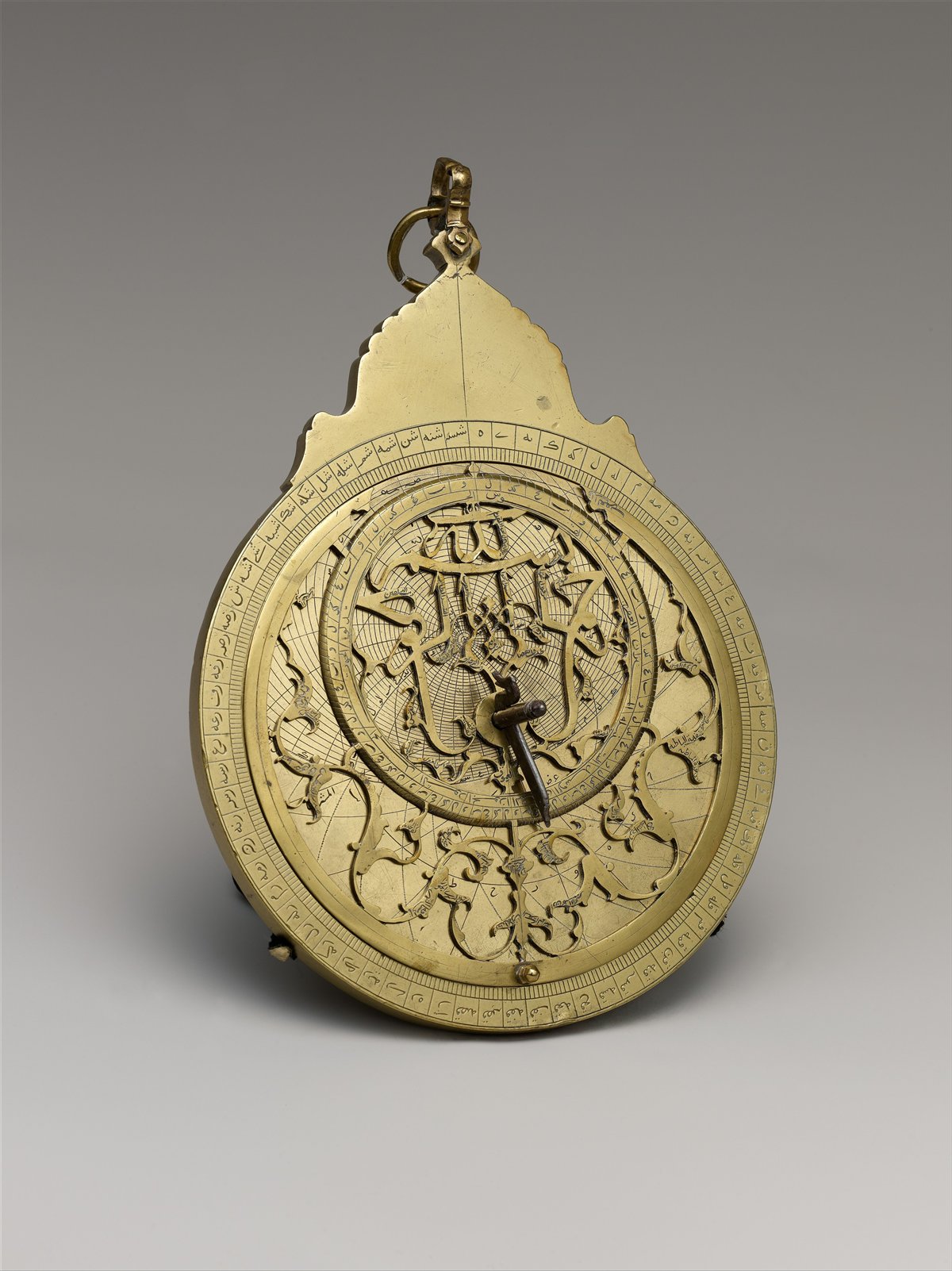
Start with the faceplate, not a calculation. Its pierced calligraphy opens with an invocation to God. Around it, circles and graduations make the brass look dense with possible uses. Art, calculation and belief occupy the same small space.
Muhammad Zaman’s astrolabe is dated 1065 AH, or 1654–55 CE, and attributed to Mashhad. The Met says an instrument of this size served time-telling and astrological calculations rather than precise astronomical observations. That distinction is more useful than an extravagant claim that the object proves either modern precision or astrology.
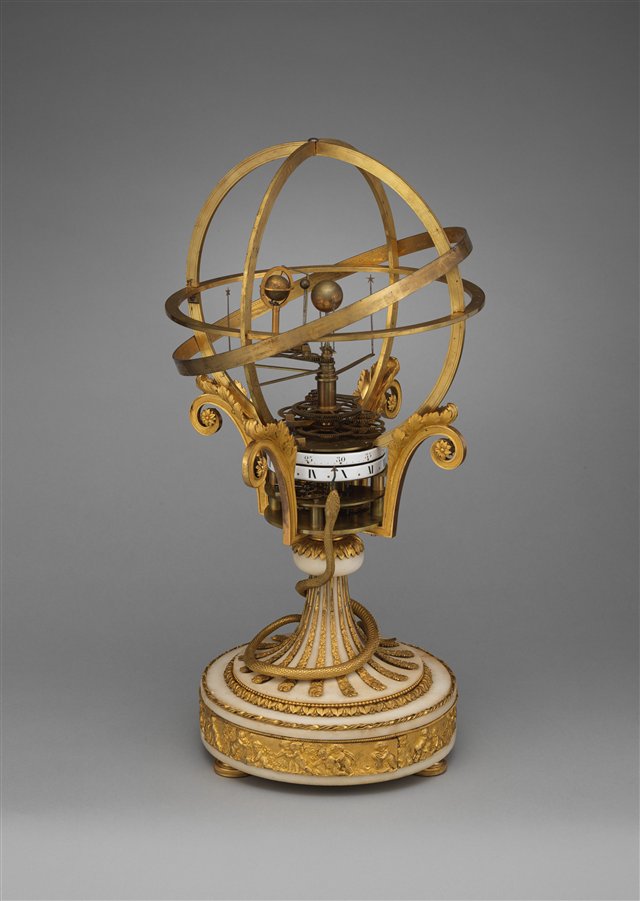
There is another way to bring a sky indoors. The gallery’s Parisian orrery clock, made in 1790, offers a mechanical model above an elaborate base. Compare the two objects: neither is simply a picture of the heavens, and neither needs a fabricated working demonstration to reward a closer look.
What we know
This account follows the museum’s identification of the object. Inspect the original collection record.
What is still open
The Mashhad attribution remains qualified. This is a historical object story, not a tested reconstruction or a claim that astrology is scientifically established.