The copy that deserves a second look
A lavish shell has two histories. Keeping them apart makes it more interesting.
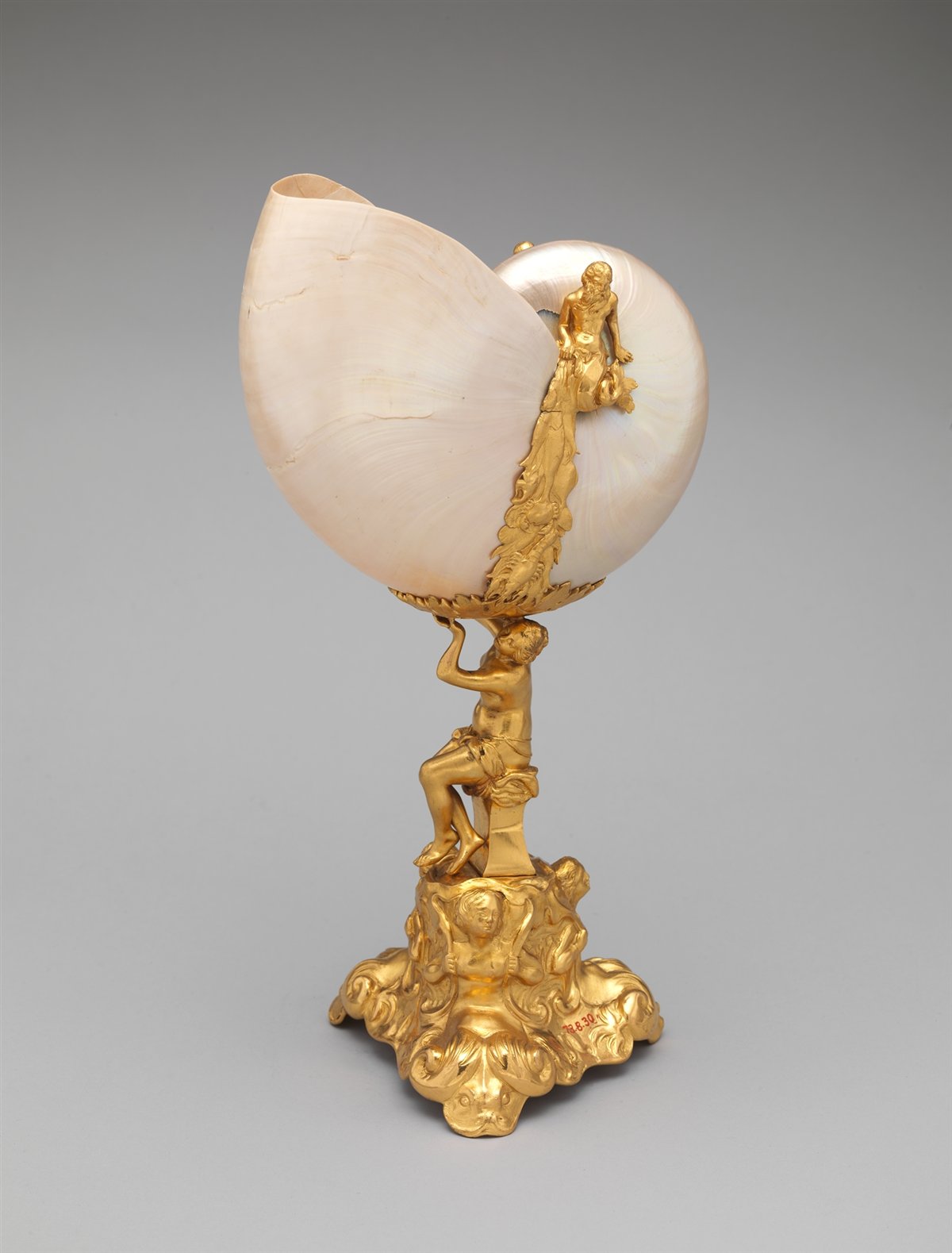
A natural spiral, a metal mount, supporting figures: the eye reads the object before it reads the date. It could easily carry the atmosphere of a seventeenth-century treasure. The catalogue then gives the story a turn.
The Met identifies this Nautilus shell as a nineteenth-century work by Franchi and Son in London, after an early-seventeenth-century Dutch original. The photographed object is not itself that older original. A connection between the original and a painting cannot be transferred to this later copy.
The distinction is not a disappointment to explain away. A reproduction can carry a history of interest in an earlier object, as well as the skill and choices of its own makers. Look again at the join between shell and metal, then return to the date. You are looking at a different kind of survival.
What we know
This account follows the museum’s identification of the object. Inspect the original collection record.
What is still open
This account does not establish the history of physical ownership or permission to trade shell material. It identifies the museum object and the reproduction distinction.